Nutrition & Lifestyle

9 min read
When you're on a GLP-1 medication like semaglutide, your appetite drops — sometimes dramatically. That's the medication doing its job. But it changes the nutrition equation in an important way: when you're eating less overall, what you eat matters more than ever. Every bite has to work harder for your body.
This guide is a practical, no-nonsense look at what to eat on a GLP-1 — how to prioritize protein, get enough fiber, manage side effects through food, and build a simple, sustainable way of eating you can actually stick to.
This article is educational and general in nature; it isn't personalized medical or dietary advice. For guidance tailored to you, talk to your provider or a registered dietitian.
The one rule that matters most: protein first
If there's a single dietary priority on a GLP-1, it's this: eat your protein first.
Here's why it matters so much. When your appetite shrinks, it becomes surprisingly easy to under-eat protein — and if protein runs low during rapid weight loss, your body can lose muscle along with fat. That's the outcome you want to avoid. Eating protein first at each meal, before you fill up, makes sure you get it in while you still have the appetite for it.
Current guidance from major nutrition organizations suggests aiming for a meaningful amount of protein daily during active weight loss, typically spread across meals — many dietitians target roughly 20–35 grams per meal. Your specific target depends on your body and situation, which is worth confirming with a provider or dietitian.
Good protein sources that tend to sit well:
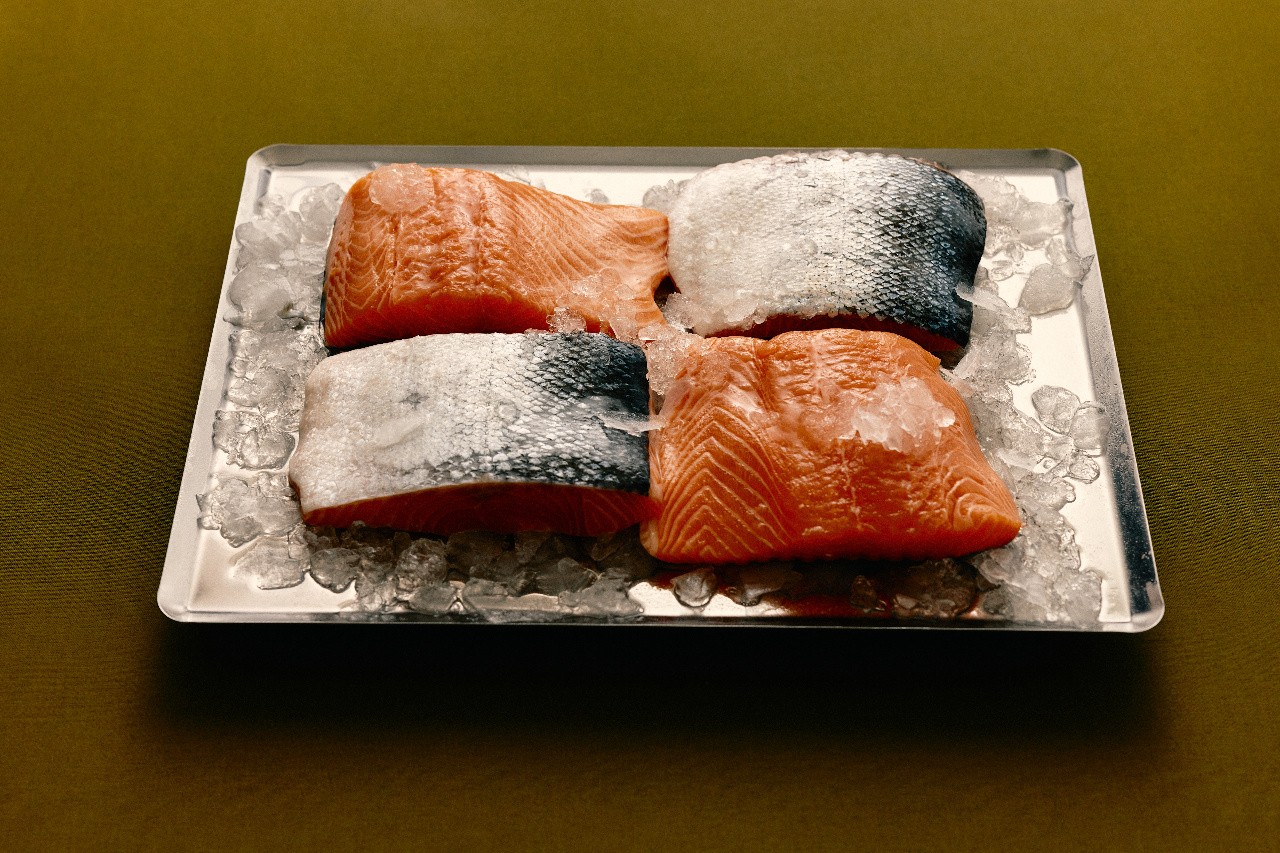
Chicken, turkey, fish (salmon, cod, tilapia)
Eggs
Greek yogurt and cottage cheese
Tofu, beans, and lentils (if you tolerate them)
Protein shakes or smoothies — especially useful on days when nausea makes solid food harder
Don't forget fiber
Because GLP-1s slow digestion, constipation is one of the most common side effects — and fiber is your first line of defense. Fiber also feeds healthy gut bacteria and helps you feel satisfied.
Aim to include fiber-rich foods at most meals: vegetables, whole fruits, oats, quinoa, brown rice, beans, and leafy greens. Increase fiber gradually rather than all at once, since a sudden jump can cause bloating. Many providers also suggest a fiber supplement when starting a GLP-1 — worth asking about if constipation becomes an issue.
What a good plate looks like
You don't need a special or restrictive diet on a GLP-1. A simple, effective structure is:
Half your plate: non-starchy vegetables (for fiber, volume, and nutrients)
A quarter: lean protein (eaten first)
A quarter: fiber-rich complex carbs (oats, quinoa, sweet potato, brown rice)
A little healthy fat: avocado, olive oil, nuts — in moderation, since high-fat meals can worsen side effects
The principle underneath it: nutrient density over empty calories. When you're only eating a modest amount, you want that amount packed with nutrition.
Eating to manage side effects
Food choices can meaningfully reduce the nausea and digestive discomfort that can come with a GLP-1, especially early on:
Eat smaller, more frequent meals and stop at comfortable fullness — large meals can feel physically uncomfortable when digestion is slowed.
Go easy on greasy, fried, and very spicy foods, which tend to sit heavily and worsen nausea.
Limit added sugar and refined carbs (soda, juice, candy, white bread) — they're low on nutrition and can spike and crash your energy.
Stay hydrated, with small sips throughout the day. This helps with both nausea and constipation.
If mornings are rough, a protein smoothie is often easier to get down than solid food.
Watch for nutrient gaps
Eating less can raise the risk of coming up short on certain nutrients over time — calcium, vitamin D, and vitamin B12 are common ones to keep an eye on. This is another reason nutrient-dense eating matters, and a reason to check in with your provider about whether any supplementation makes sense for you.
The bottom line
Eating well on a GLP-1 isn't about a special diet — it's about making a smaller amount of food work harder: protein first, plenty of fiber, nutrient-dense choices, and easy-on-the-stomach habits that keep side effects in check. Done consistently, this is what protects your muscle, keeps your energy up, and helps the results last.
The medication does a lot of the work on appetite. Nutrition is how you make sure the weight you lose is the right weight — and how you set yourself up to keep it off.
At Kinro, medical weight management comes with clinical support, so you're not left to figure the food part out alone.
This article is for general educational purposes and is not personalized medical or nutritional advice. Nutritional needs vary between individuals, especially while on a GLP-1 medication. Consult your healthcare provider or a registered dietitian for guidance specific to your situation, and follow your provider's instructions regarding your medication.
Protein first is the top priority — when appetite drops, it's easy to under-eat protein and lose muscle along with fat.
Fiber matters too: it eases the constipation GLP-1s commonly cause and keeps you satisfied. Increase it gradually.
You don't need a special diet — just nutrient-dense plates and easy-on-the-stomach habits that keep side effects in check.
What should you eat on a GLP-1 like semaglutide?
Prioritize protein at every meal, plenty of fiber-rich vegetables and whole grains, and nutrient-dense foods over empty calories. A good structure is half your plate vegetables, a quarter lean protein (eaten first), a quarter complex carbs.
How much protein do you need on a GLP-1?
Enough to protect muscle during weight loss — many dietitians target roughly 20–35 grams per meal, though your specific need depends on your body. Confirm your target with a provider or dietitian.
What foods should you avoid on a GLP-1?
Greasy, fried, and very spicy foods tend to worsen nausea, and added sugar and refined carbs offer little nutrition when you're eating less. Large meals can also feel uncomfortable with slowed digestion.
How do you deal with GLP-1 nausea through food?
Eat smaller, more frequent meals, stop at comfortable fullness, avoid heavy greasy foods, stay hydrated with small sips, and try a protein smoothie if mornings are hard.
Cleveland Clinic. GLP-1 Diet: What to Eat & Avoid. https://my.clevelandclinic.org/watch/glp-1-diet
U.S. News & World Report. What to Eat on GLP-1s, According to a Dietitian. https://health.usnews.com/wellness/food/articles/what-to-eat-and-avoid-on-semaglutide
UCHealth. Nutrition is vital when taking GLP-1 weight loss drugs. https://www.uchealth.org/today/nutrition-vital-when-taking-glp-1-weight-loss-drugs/
Joint advisory on protein and resistance training during weight reduction (American College of Lifestyle Medicine, American Society for Nutrition, Obesity Medicine Association, The Obesity Society), 2025.